
Can Nationalists Learn From the Muslim Brotherhood?
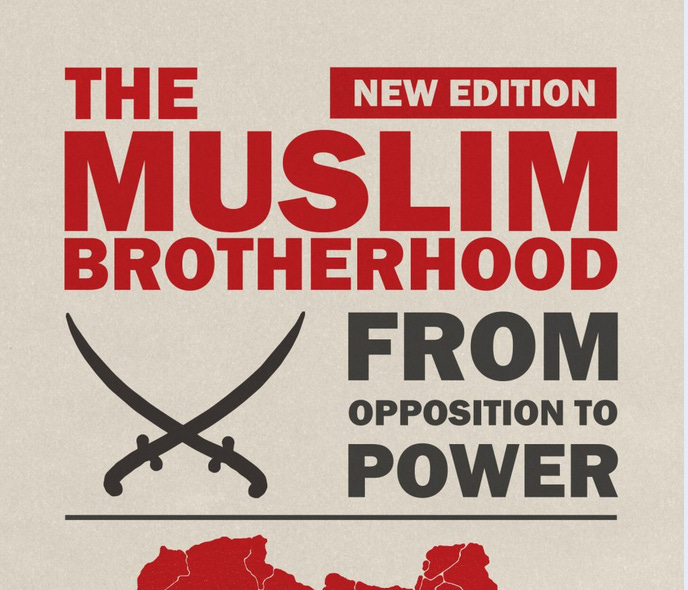
The Crusaders – much maligned defenders of Christendom – were second to none in their hostility to Islamist aggression. But they were also very much aware that there were aspects of Muslim civilisation from which Europeans could learn, and which our young nations could take and adapt for our own benefit.
These days, the default position of the ‘Counter-Jihad’ movement – aided by the bitter experiences of so many people at the hands of immigrants from some of the most poorest, least educated, cousin-marriage-blighted and most crudely fundamentalist parts of the Islamic world – is that all Muslims are ignorant morons.
This actually racist contempt is not merely inaccurate, and therefore unfair, it is always very foolish. Because, however much we and they agree (or should agree) on evils such as usury, LGBTQ indoctrination, abortion and Zionism, the fact remains that the increasing radicalisation of the expanding Muslim population of the West is a growing and mortal danger not merely to peace but to our entire civilisation.
In any sort of contest or confrontation, it is always a grave mistake to under-estimate one’s opponent, and they are – at present – our opponents. They shouldn’t be, because in truth we share common enemies far more dangerous to both of us than we are to each other. And they might not be forever, because fast-changing international economic and power relations may one day mean that it makes sense to them as well as to us that their diaspora in the West should and can return happily to their lands of ethnic origin.
But, for now, as seen for example in my article on France’s Muslims the other day, we DO have a very serious problem with Islamification. To under-estimate what we face is very foolish, for two reasons: First, there are sinister forces - which, as a matter of fact, are largely responsible for the demographic transformation of our countries in the first place – and which are hell-bent on turning the tensions between our two cultures into a bloody inter-communal war.
To fail to grasp the intelligence, experience and resources of our potential opponents in such a conflict is to guarantee that our people will suffer a series of extremely unpleasant surprises and devastating reverses. The plain truth is that many of those pushing us towards ‘Civil War’ don’t want or expect us to win, they simply want to see Europe in flames and wading through Rivers of Blood.
The dictum to “be careful what you wish for” applies to communal conflict even more than it does to individual lives, and wishing for violent confrontation, especially with communities which are far better organised and more cohesive than one’s own, is a classic example.
“Sandal-Wearing Goat Herders”
This isn’t just about how those despised “sandal-wearing goat herders” kicked the arses of the Russians and Americans in Afghanistan, fought the best of the British Army to a mutual standstill in Helmand, and bogged down the mighty and brutally unrestrained IDF in Southern Lebanon and Gaza. It is also about the extraordinary sophistication, limitless ambition and sheer power of the Muslim Brotherhood.
This shadowy organisation has spent decades simultaneously infiltrating and supporting Sunni Muslim communities, not only in the West but also in Muslim countries dominated by corrupt global elite puppet regimes. Despite often violent repression by various pro-‘Western’ dictatorships, the Muslim Brotherhood has built a worldwide network of dedicated organisers, financiers, advocates and militants.
To understand the threat better, let us return briefly to France. In 2025, the French government released a highly sensitive report, Frères Musulmans et Islamisme Politique en France (The Muslim Brotherhood and Political Islamism in France).
Commissioned in 2024 by the Interior Ministry, the document was prepared by two senior civil servants and presented to President Emmanuel Macron at a meeting of France’s Defence Council, signalling that the state regards the issue as a significant national concern.
The central warning of the report is that the Muslim Brotherhood poses a threat to France’s secular ‘democratic’ system not through violent jihadism, but through long-term ideological influence and institutional infiltration.
According to the report, the Brotherhood operates “from the bottom up,” particularly at local levels in municipalities, schools, mosques, sports associations, and NGOs. Rather than advocating overt separatism or violent overthrow, the strategy seeks gradually to change social and institutional norms, influencing education, gender norms, religious practice, and political representation. This phenomenon, sometimes called “municipal Islamism,” will reshape republican institutions over time if left unchallenged.
One of the most sensitive claims is that a specific federation, Musulmans de France (formerly UOIF), is a national branch of the Muslim Brotherhood. The report estimates that there are 139 mosques officially affiliated with this federation, plus another 68 deemed “close” to it, together amounting to roughly 7% of all mosques in France. It also points to dozens of schools linked to the movement, as well as associations spanning education, sports, and welfare. These networks are developing a parallel Islamist civil infrastructure.
The report’s authors also claim that the Brotherhood employs dissimulation, victimisation narratives, and complaints about Islamophobia as tools for influence. However, the report pointedly avoided the fact that such approaches are mirror images of the way in which Zionist and self-appointed ‘defenders of the community’ have long worked to mobilise Jews to support the state of Israel and their Political Judaism.
The only people who do not have serious ethno-religious organisations jostling for their place at the multi-cultural trough are the indigenous Christians. Which brings us to the second way in which ignoring the extremely well-organised, motivated and potentially militant forces among Muslim communities in the West is a piece of foolish arrogance.
Just as with personal hygiene and medicine at the time of the Crusades, when it comes to building community solidarity and power in the 21st century, the Muslims are hugely more advanced than we are. That is not to say that we are not more capable in some other ways, or that we should give in to the idea that their victory is in any way ‘inevitable’. It is not, although it might be, if we fail to do the obvious thing – study what they do and adopt their tactics – or work out similar ones which particularly suit our people and circumstances - for the benefit of our Cause and our folk.
On the assumption that all my readers are smart and rational enough to take that point without pressing it any further, let us move on to examine the Muslim Brotherhood.
Can Nationalists Learn From the Muslim Brotherhood?
The Muslim Brotherhood was founded in 1928 in Egypt, by Hassan al-Banna, a schoolteacher deeply concerned about moral and political decline under colonial rule.
Inspired by revivalist, Salafist thinkers, al-Banna argued that the Koran and the actions and teachings of Mohammed should guide all aspects of Muslim life - not just individual piety, but politics, society, and economics.
In its early years, the Brotherhood focused on social reform, education, and charity, establishing mosques, schools, youth centres, and Koranic schools, especially in poor communities. This grassroots social infrastructure gave the movement legitimacy and a broad base of support.
In the 1940s, the Brotherhood developed a more explicitly political and clandestine dimension. A “special apparatus” was formed that engaged in covert political activity, including attempts at assassinations.
After al-Banna was assassinated by Egyptian security services in 1949, the organisation went through cycles of repression, most brutally under Gamal Abdel Nasser in the 1950s, when many leaders were imprisoned or executed. Despite this, the Brotherhood did not disappear, not least because Western intelligence agencies, particularly the Mossad, encouraged it, in the hope of weaponising Islamism against the anti-colonial and anti-Zionist Arab nationalism of Nasser and, later, Gaddafi and the Assads.
Aided from without and making its own organisational progress within, the Brotherhood re-emerged in later decades, participating through legal and political channels, most famously when Muhammad Morsi became Egypt’s president in 2012 (a rule that ended in 2013 after mass protests and a military coup).
Despite that reverse, the Muslim Brotherhood continues to be a powerful force in many Islamic countries. It has also sunk deep roots in Sunni communities in the West. The only thing unusual in France is that the liberal state whose policies have created the problem have at least had the wit to notice it.
The Brotherhood’s power today derives from a multi-layered strategy. First, it builds social infrastructure through charities, welfare work, education, and religious institutions. This gives it grassroots legitimacy within many Muslim communities.
Second, it practices disciplined ideological socialisation (known as tarbiya), recruiting dedicated members who receive ideological training and are gradually elevated into leadership positions in all sorts of fields.
Third, politically it pursues a gradualist, bottom-up approach: rather than seizing power quickly, it works within the system where it can, participating in elections when this is deemed useful, forming political wings, and seeking influence through social engagement.
Fourth, its notion of “jihad” is broad — not limited to violence, but including spiritual and intellectual struggle, as well as political activism aimed at the “Islamisation” first of Muslim communities and then of broader society.
Fifth, secrecy remains part of its toolkit: although many branches are now open and legal, the Brotherhood has historically maintained hidden structures to preserve organisational coherence and long-term resilience, including financial security. Seemingly non-political and non-religious business structures can provide money, employment, transport, facilities and ‘cover’ for personnel and operations.
Finally, it operates transnationally, building networks across the Arab world and beyond, with affiliates that spread its ideology and bolster its reach.
In the United States, the Brotherhood’s presence dates back to the late 1950s. According to research by the (extremely biased) Program on Extremism at George Washington University, Brotherhood-linked organisations have long operated in the US, not always under the “Muslim Brotherhood” label, but through charitable, advocacy, and Islamic outreach groups. These organisations maintain a well-organised structure, engage with the Muslim community, and in some cases influence policy and public opinion.
The organisation has also developed a significant footprint in Britain. A little-known government-commissioned review in 2014 examined the Brotherhood’s philosophy, institutions, and influence in the UK. There are overlapping networks of charities, mosques, and think tanks that are linked to the Brotherhood. The Muslim Association of Britain (MAB) is often cited as having Brotherhood origins, and a variety of UK organisations - including the Cordoba Foundation - are regularly scrutinised for their ideological connections.
The UK’s 2015 review noted that Brotherhood-linked charities in Britain have raised funds over decades. Some are tied to political Islam, and these organisations are influential in certain parts of the Muslim community. This is despite the efforts of some government-approved ‘moderates’, who push for a “British Muslim” identity that claims to integrate Islamic values with liberalism.
To be honest, none of what they do is rocket science. The contrast between the quiet, patient, logical, and disciplined work of the radical Islamists, and the noisy, impatient, irrational and undisciplined running-around-in-circles of the would-be indigenous resistance is stark. The difference is not down to some impossible-to-follow genius among Muslims, it is the result of the immature idiocy of so many people on our side of the ethno-religious divide.
What Is To Be Done?
As we continue to consider my own proposals in What Is To Be Done, some readers may spot points at which my prescriptions for progress have parallels with aspects of the work of the Brotherhood.
What Is to be Done?

The way ahead for genuine nationalists is at last clear. There has been a period of confusion and drift since the political establishments of country after country beat down the nationalist electoral insurgencies which once appeared to be the way forward. But this must - and will - end now.
This shouldn’t surprise anyone; despite representing different traditions and being primarily concerned for different peoples, we do face common or similar enemies, problems and threats. The oddity is not that we reach some similar conclusions, but that other similarly intelligent and sincere individuals in our camp can look at the same situations and come up with ‘answers’ which are so self-evidently self-defeating, unrealistic and futile.
Our interest in the Muslim Brotherhood should not therefore be to look to copy them, although it is always better to learn from the mistakes of others, rather than by repeating them and learning the hard way. Likewise, it is quicker to adopt the successful innovations of others rather than spending time and money reinventing the wheel.
The principal thing we can take from studying their work is confirmation that our own efforts, to develop what may be broadly termed ‘counter power’ initiatives, are on the right general track. There are a growing number of nationalists and traditionalist Christians exploring various aspects of such work.
Here on Substack, for example, you may already be familiar with Rod Dreher, whose Benedict Option was an early example of the genre. Unfortunately, while we can agree with much of what he says about the cancer of liberalism, Dreher’s thoroughly un-Biblical Christian Zionism puts him in another camp every bit as much as the followers of al-Banna. But that doesn’t mean that we should ignore him. To adapt another common-sense English phrase, we should not throw the innocent Christian baby out with the bloody Zionist bathwater.
More applicable, and much more practical, ideas on our lines will be found in Dan Eriksson’s phenomenally good Beyond Collapse and the work of Det fria Sverige. I have no idea if they have even studied the Muslim Brotherhood, let alone taken any inspiration from them.
What I do know, for sure, is that political Islamists and political Judaists have over the years developed rather similar strategies work to advance their own group interests. And that, at present, we are way behind in this field.
There’s no need to beat ourselves up over this. It’s largely due to the fact that, historically, our people have been the ones with the power, the undisputed masters, the overwhelming majority in our own lands, and often the dominant colonial force in theirs. They were the weak, the oppressed, and – in our lands – the minorities.
The balance, however, has now all too clearly changed. It is now our people who are weak and oppressed, second-class citizens. We are already a tiny minority globally, and rapidly becoming the minority in ever more parts of our own homelands.
This is the new reality. Future generations would indeed be entitled to hold us in contempt if we fail to take this drastically altered situation into account, and to change our strategy and tactics accordingly.
The theory of this is so patently true that only the most unrealistic, pig-headed of fools will try to argue against it, although rather more will take the comfortable and profitable paths of ignoring it, as they waste years more of their followers’ time offering them trite and impossible ‘solutions’.
I do appreciate, however, that there will be realists who accept the theory, but wonder about how we can put it into practice, and especially how we can play catch up with other groups which have been working with such tactics for so much longer.
All I can say to them is, have faith, in our people as well as in Divine Providence. And be sure to subscribe to this Substack, because the next essay in this series will deal with precisely that point – giving practical examples of the sort of things which indigenous European activists can start doing – right now – to set out along our people’s long road back.
